How scaling your tasking projects can get much easier

When you’re tasking a single satellite for a small AOI, manual tracking is manageable. But when you move to monitoring a global supply chain or a nationwide infrastructure project, the overhead of managing individual orders, waiting for deliveries, and stitching together multiple types of data becomes a bottleneck that kills ROI.
Over the past few months, we’ve been rebuilding our tasking backend and frontend to solve this exact problem. The goal? To move from simply managing orders to using your tasking solution as a strategic advantage.
1. Speed: Faster image deliveries
In the past, delivery windows for tasked imagery were inconsistent, often taking many hours to reach the end user. But with high-stakes monitoring, users need rapid access to freshly captured imagery, so many hours isn’t good enough.
To solve this, we’ve made improvements to minimize latency and prioritize speed. We've significantly reduced delivery windows, providing a crucial advantage for projects that require rush tasking and immediate data access. When data arrives faster, your response time to ground-level changes becomes near real-time.
2. Visibility: From rows of numbers to project insights
When you’re managing dozens of tasking orders across multiple geographies, clicking into individual "Order Details" pages is tedious, and creates an operational blind spot where you can lose the forest for the trees.
We replaced this fragmented tracking with a unified project-level view. By filtering your workspace by project name or custom tags, you can instantly isolate every asset tied to a specific project. This consolidated view helps you by aggregating progress across your entire tasking project. You can now visualize multiple AOIs and assets simultaneously on an interactive map and see the combined total of ordered versus delivered square kilometers without touching a spreadsheet.

3. Consistency: Automation via repeat orders
Scaling is about doing more, and doing so consistently. If your initiative requires monthly monitoring of a site, you shouldn't have to manually place that order 12 times a year.
Our repeat tasking feature allows you to schedule tasking for consistent, automated data collection. You set the parameters once, and the system handles the rest. This ensures that your time-series analysis is never interrupted by a manual oversight, providing the reliable data stream needed for long-term scaling.
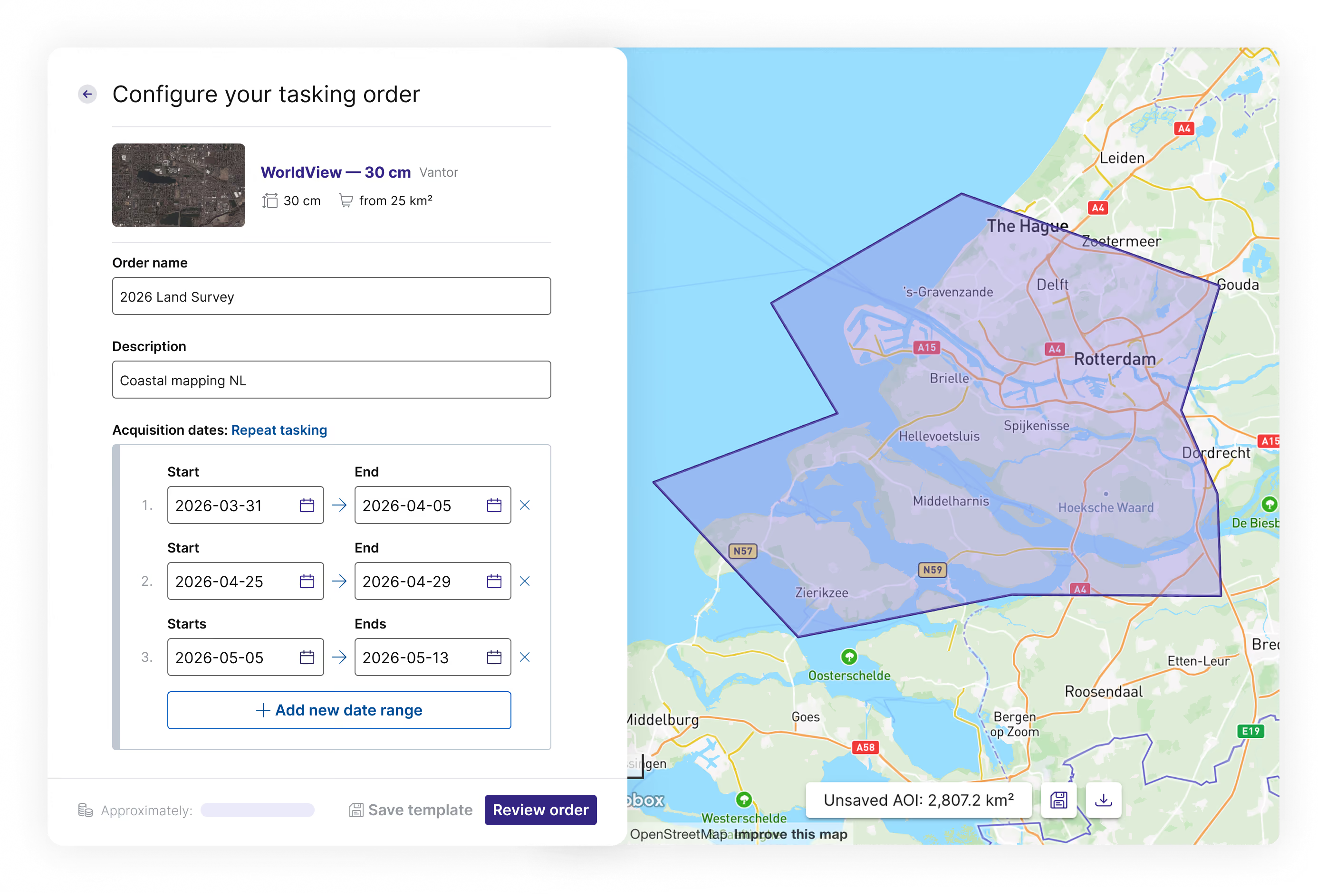
4. Logistics: Streamlining the “paperwork"
Finally, we've tackled the administrative friction of tasking. For large projects, reviewing feasibility studies and accepting quotes for dozens of AOIs used to be a click-heavy process.
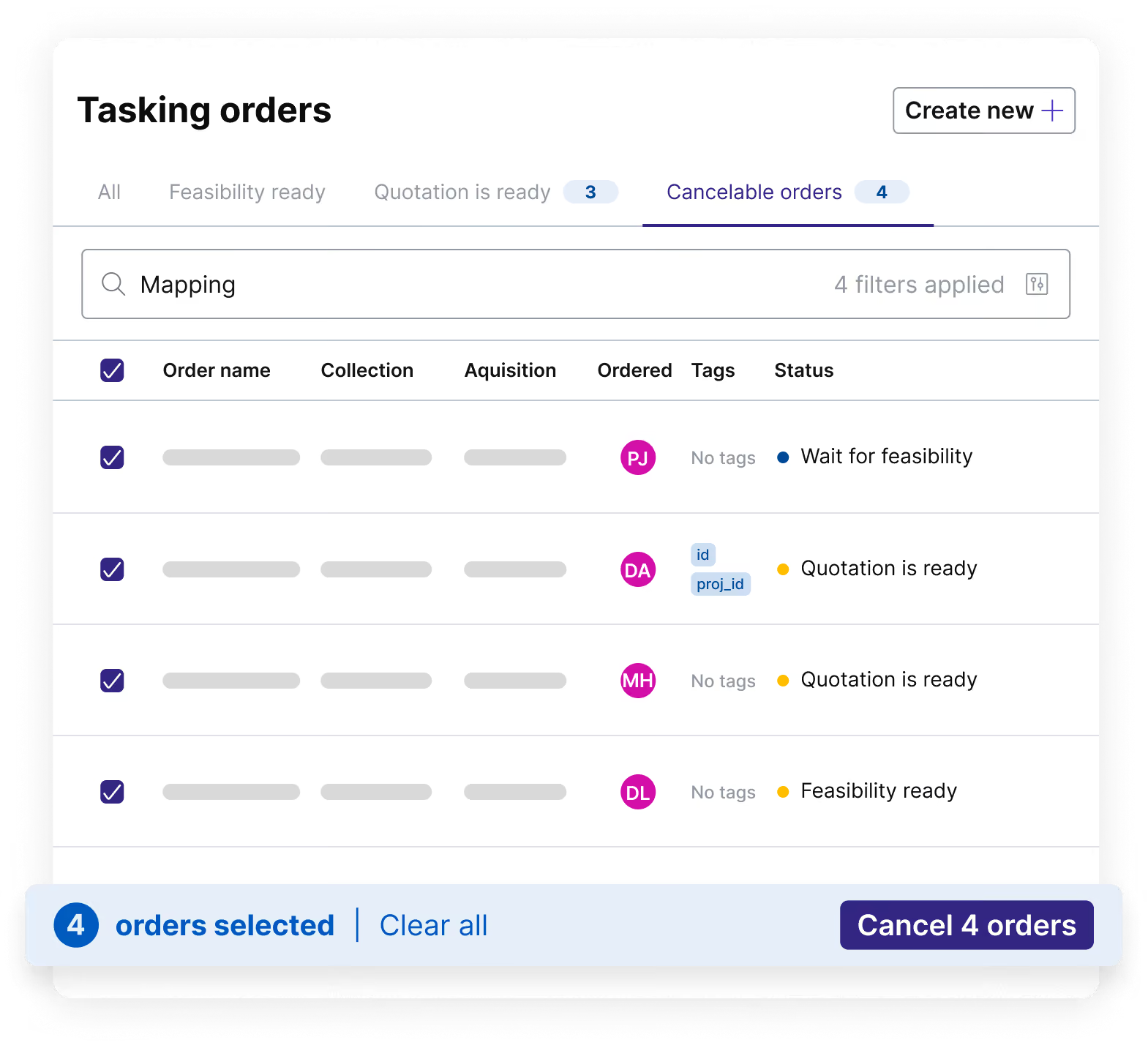
You can now view and manage price quotations in bulk. By accepting or rejecting multiple quotes simultaneously, you can move an entire project from the "planning" stage to the "active" stage in seconds.
In that same vein, the new 'Cancellable orders' tab provides the autonomy to pivot mid-project, allowing you to select and cancel multiple orders with a single click to keep your budget and focus aligned with shifting priorities.
A successful EO-powered initiative needs a solid workflow. By reducing delivery times and centralizing project management, we’re removing the operational "tax" that usually comes with scaling up.
Ready to see how your next project scales? Check out tasking on the UP42 platform.



Subscribe to our newsletter
Stay up to date and learn about our fast-growing new features